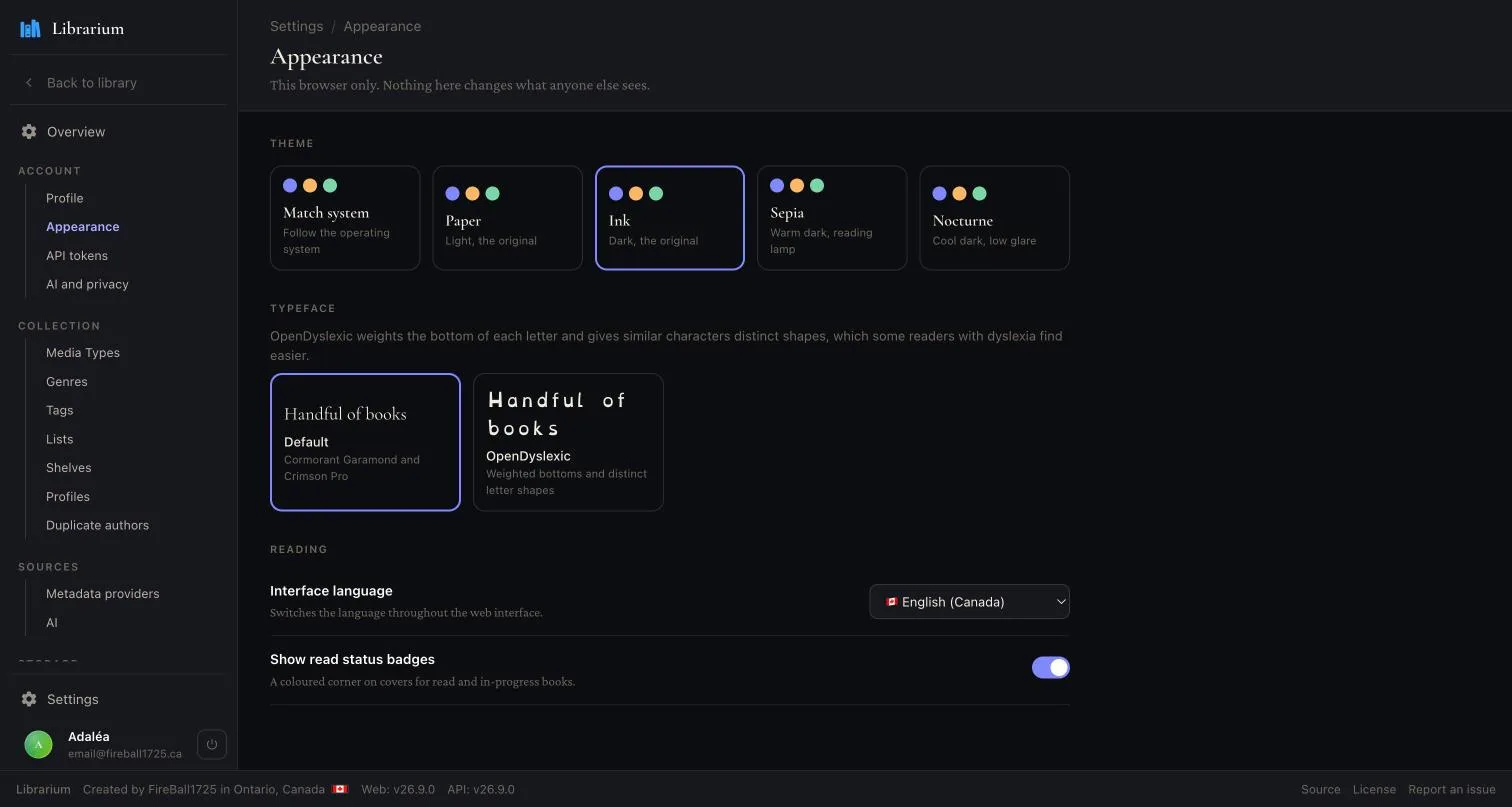
Librarium logo

Librarium

Early beta

Catalog your shelves.
On your own server.

A self-hosted, privacy-focused tracker for physical books, manga, comics, and technical documents. One instance, many libraries. Opt-in telemetry, off by default.

Heads up: Librarium is in early beta. Things are changing fast, some edges are rough, and self-hosters should expect to read release notes before upgrading.

Built for collectors who run their own stack.

Self-hosted

Runs on your infrastructure in Docker or Kubernetes. Telemetry is opt-in and off by default. No external data calls unless you ask for a metadata lookup.

Multi-library, multi-user

A single instance hosts independent libraries (shared household, personal collection, tech manuals) with per-library roles.

Print-first catalog

FRBR-style work/edition model tracks physical books, manga, comics, magazines, and technical documents without schema gymnastics.

Bring your own AI

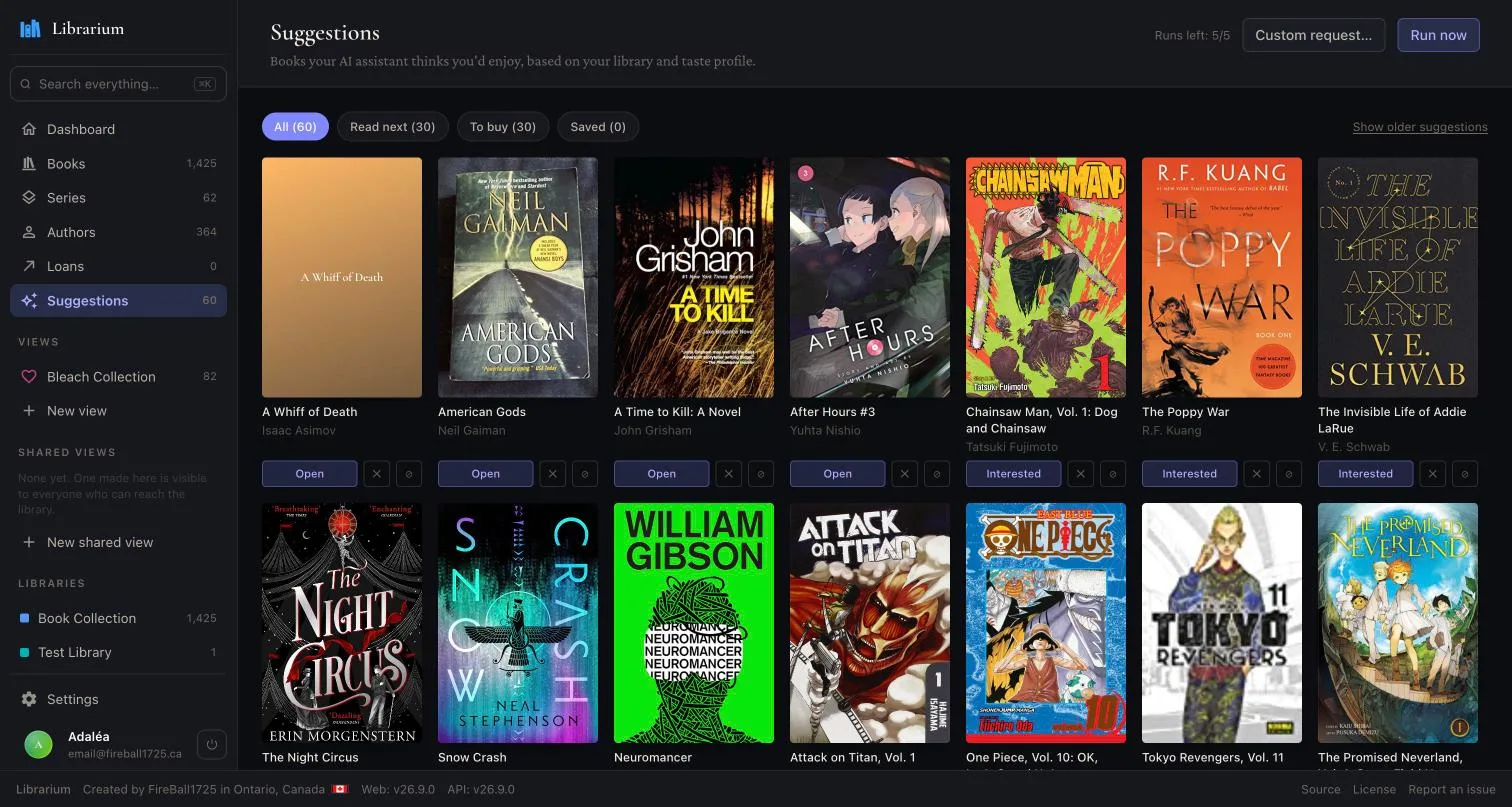
Opt-in reading suggestions backed by Ollama, Osaurus, OpenAI, or Anthropic. Pick your provider and model. Run locally or ship it to the cloud, your call.

Scheduled work, observable

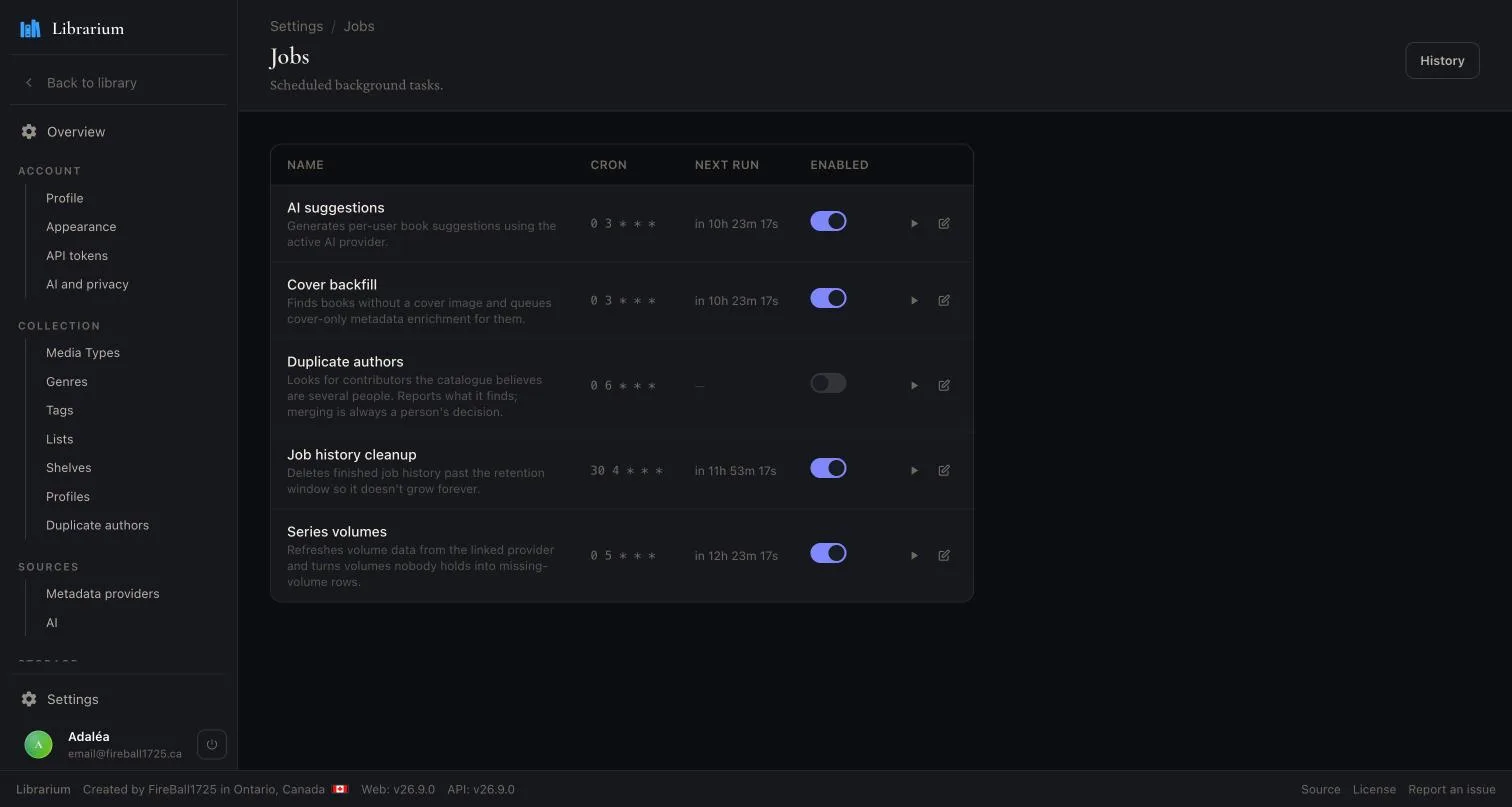
Cover backfills, metadata refreshes, and AI runs all live on a single cron-driven jobs page. Run on demand, inspect history, or let it tick quietly.

Bring your own storage

For ebooks and PDFs, Librarium stores a path reference. Your files stay where you put them.

Cross-platform

Go API, React web UI, and a native SwiftUI iOS app (TestFlight today, App Store soon).

Barcode scanning

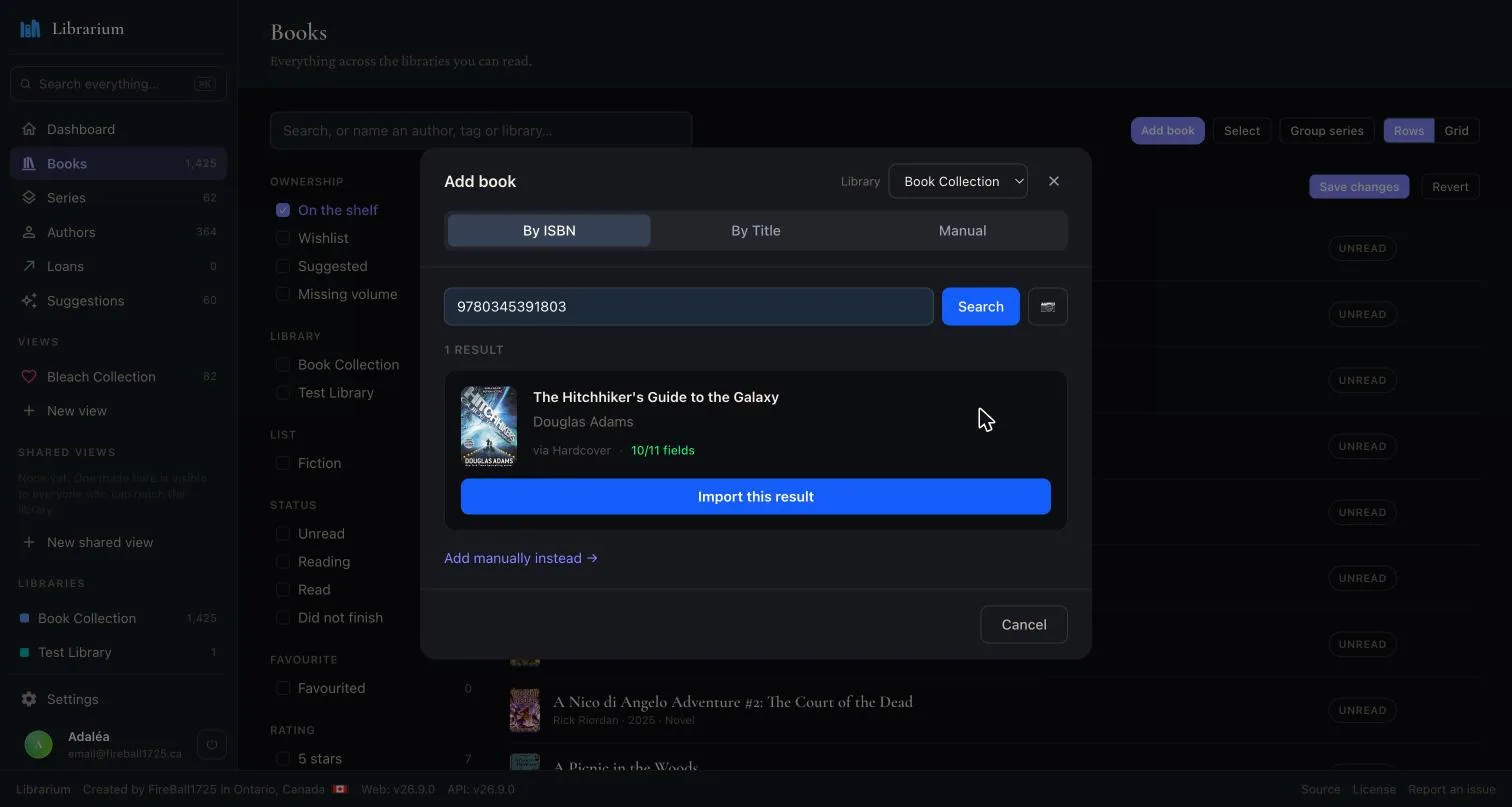
Scan an ISBN at the bookstore from the iOS app. Instantly see if you already own it, or add it to any of your libraries.

Open source

AGPL 3.0. Ship patches, file issues, or fork it. Each client lives in its own repo and ships on its own cadence.

Editions

Three ways to run Librarium.

Pick the one that fits how you want to manage your library. Self-hosted is shipping today; Lite and Plus are on the roadmap.

Lite

Coming soon

Free

Local storage with iCloud sync across your Apple devices, no server to run. The iOS app is on TestFlight today; Lite mode is shipping soon.

  • Works offline, syncs when online
  • Same data model as the server
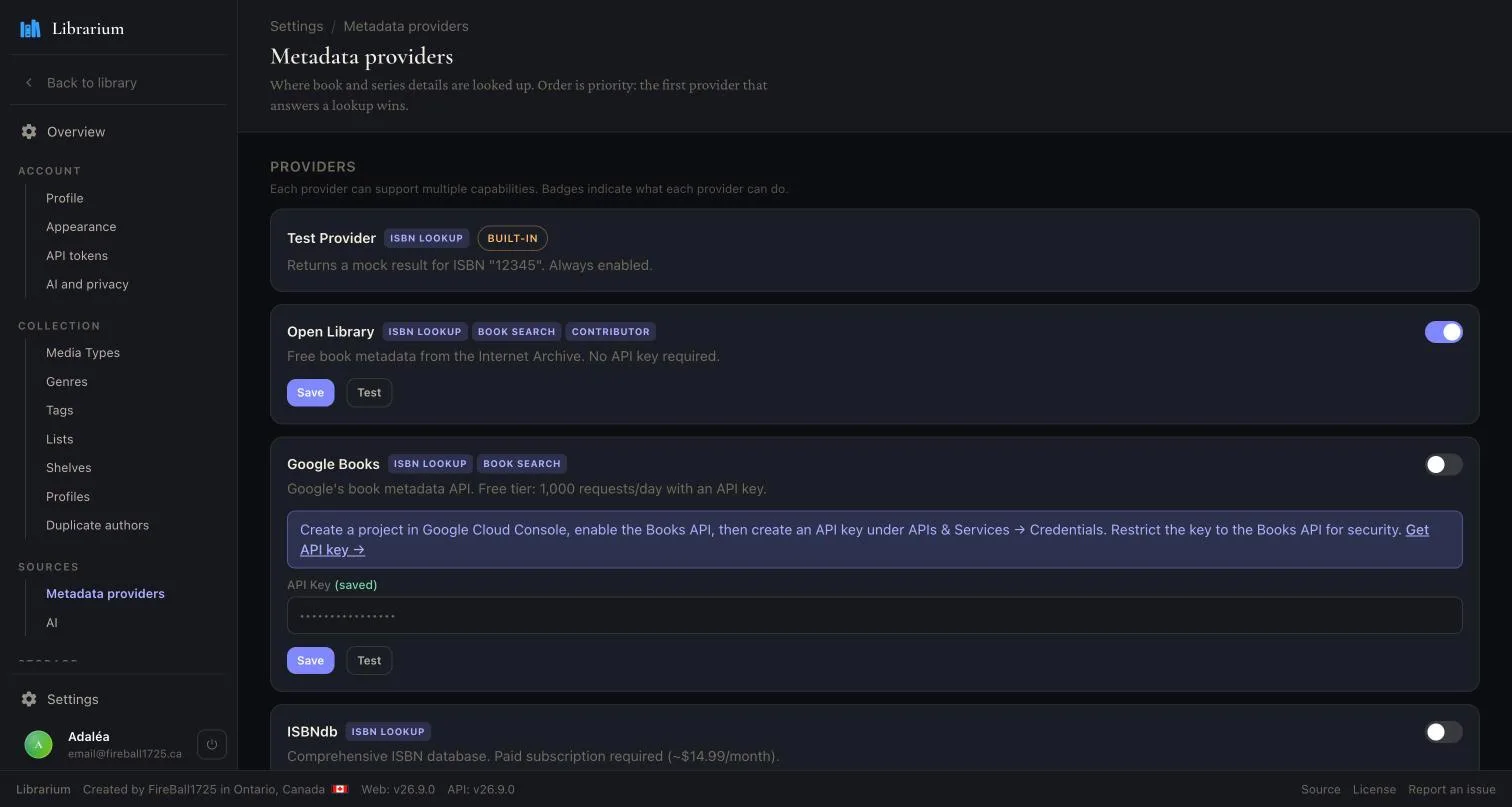
  • ISBN lookup via Open Library
  • Promote to self-hosted or Plus any time
Try the iOS app

Self-hosted

Available

Free

Run it on your own server in Docker or Kubernetes. Your data stays on your network.

  • Full feature set, no caps
  • Multi-user with per-library roles
  • AI suggestions, MCP server
  • Opt-in telemetry, off by default
Deploy it

Plus

Coming soon

Paid, free trial

We host Librarium for you. Free trial on launch. Walk away with your data whenever you want.

  • Same feature set as self-hosted
  • We handle backups and updates
  • Opt-in telemetry, off by default
  • Move to self-hosted any time

Compared

Pick the tool that fits your shelf.

A quick sanity check for readers weighing the options. An asterisk means the item is on the Librarium roadmap, not shipped yet.

Feature Librarium Calibre Readarr Bookwyrm
Self-hosted
Multi-user with per-library roles Basic No
Print-first catalog (physical books, manga, comics) Ebook-first Ebook-first
Native iOS app with barcode scanning TestFlight No No No
REST / OpenAPI Limited
AI suggestions (Ollama / Osaurus / OpenAI / Anthropic) No No No
Scheduled-jobs dashboard No No
Track books lent to friends and family No No No
Goodreads / Libib / StoryGraph CSV import * No No
Shared reading feed / activity * household only No No federated
Automated ebook acquisition * No No
Open source AGPL 3.0 GPL GPL AGPL

Partially shipped. * Planned roadmap item, not shipped yet. Comparisons reflect each project's upstream as of 26.4.

FAQ

Frequently asked questions.

Is Librarium a self-hosted alternative to Goodreads?
Yes. Librarium runs on your own hardware (Docker or Kubernetes), keeps your reading data on your server, and has no ads, no parent-company tracking, and no vendor lock-in. The closest fit if you want a Goodreads or StoryGraph experience without sending everything to a cloud service.
How is Librarium different from Calibre or Readarr?
Calibre and Readarr are ebook-first — they exist to manage downloaded files. Librarium is print-first: it catalogs the physical book, manga, comic, or magazine on your shelf using a work/edition data model (FRBR-style), and treats ebook or audiobook files as optional references hanging off an edition. If your shelves are mostly physical, Librarium fits the way you already think about a collection.
Does Librarium have a mobile app?
Yes — a native SwiftUI iOS app, currently in TestFlight with the App Store release coming next. The iOS app includes barcode scanning so you can add books straight from a bookstore shelf. There is no Android client today, and no committed plan to build one.
Is Librarium free?
Self-hosted Librarium is free and AGPL 3.0 licensed, and it ships today. Lite for iOS will also be free. Plus, the hosted version we run for you, will be a paid monthly subscription with a free trial. Both Lite and Plus are on the roadmap.
Does Librarium send my data anywhere?
Telemetry is opt-in and off by default. Self-hosted instances require an operator flag plus per-user consent before anything leaves the box, and the code that does the sending lives in the public repos. The only other outbound network calls are metadata lookups you actively trigger, like ISBN scans and cover backfills. You choose which providers to enable. Optional AI reading suggestions are off by default and use either your local Ollama instance or your own OpenAI or Anthropic API keys.
Can I import my Goodreads, StoryGraph, or Libib library?
CSV import from Goodreads, StoryGraph, and Libib is on the 26.5 roadmap. Once shipped, you drop in the export from any of those services and Librarium will hydrate the catalog with metadata and covers from your configured providers.

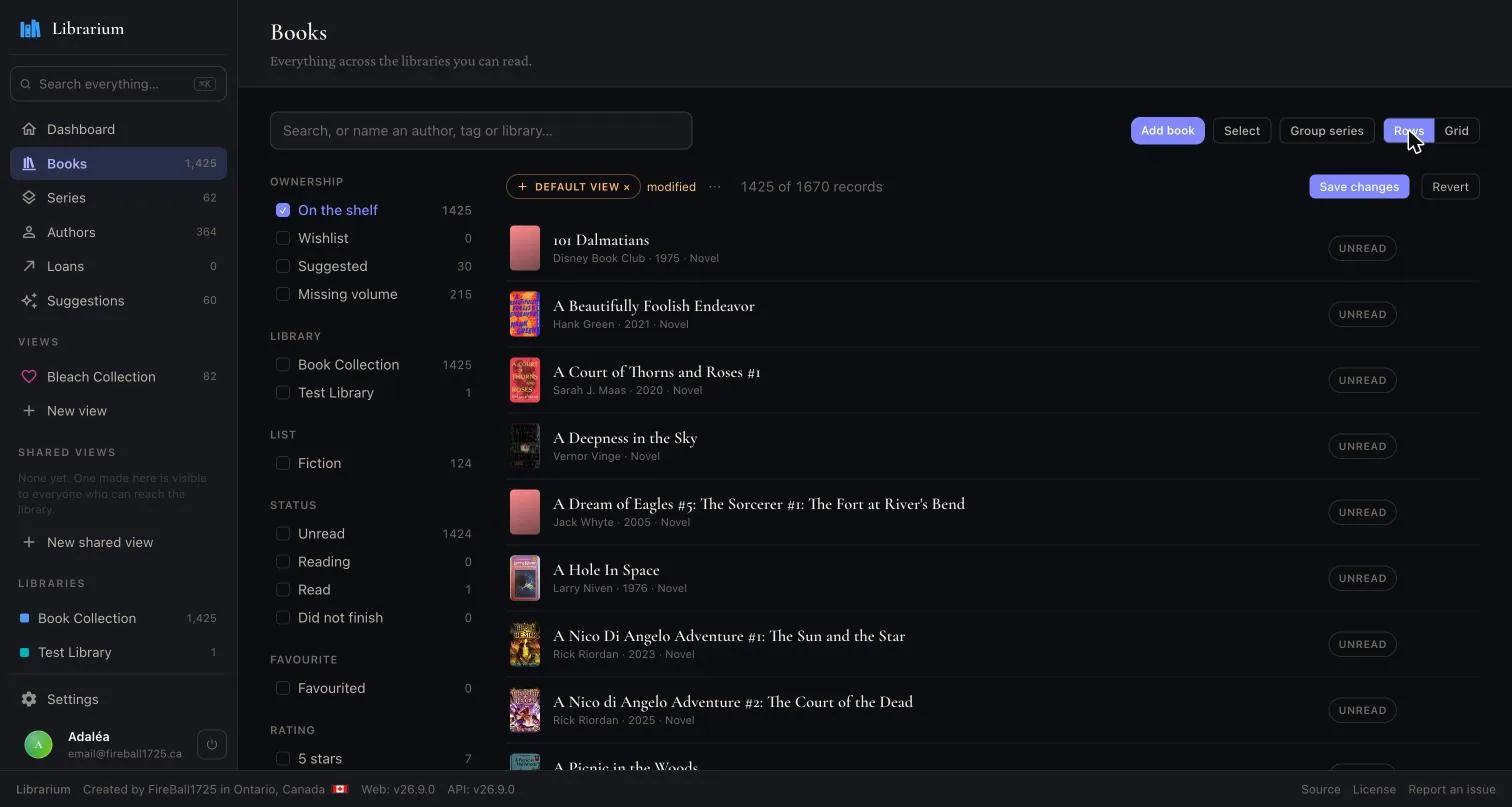
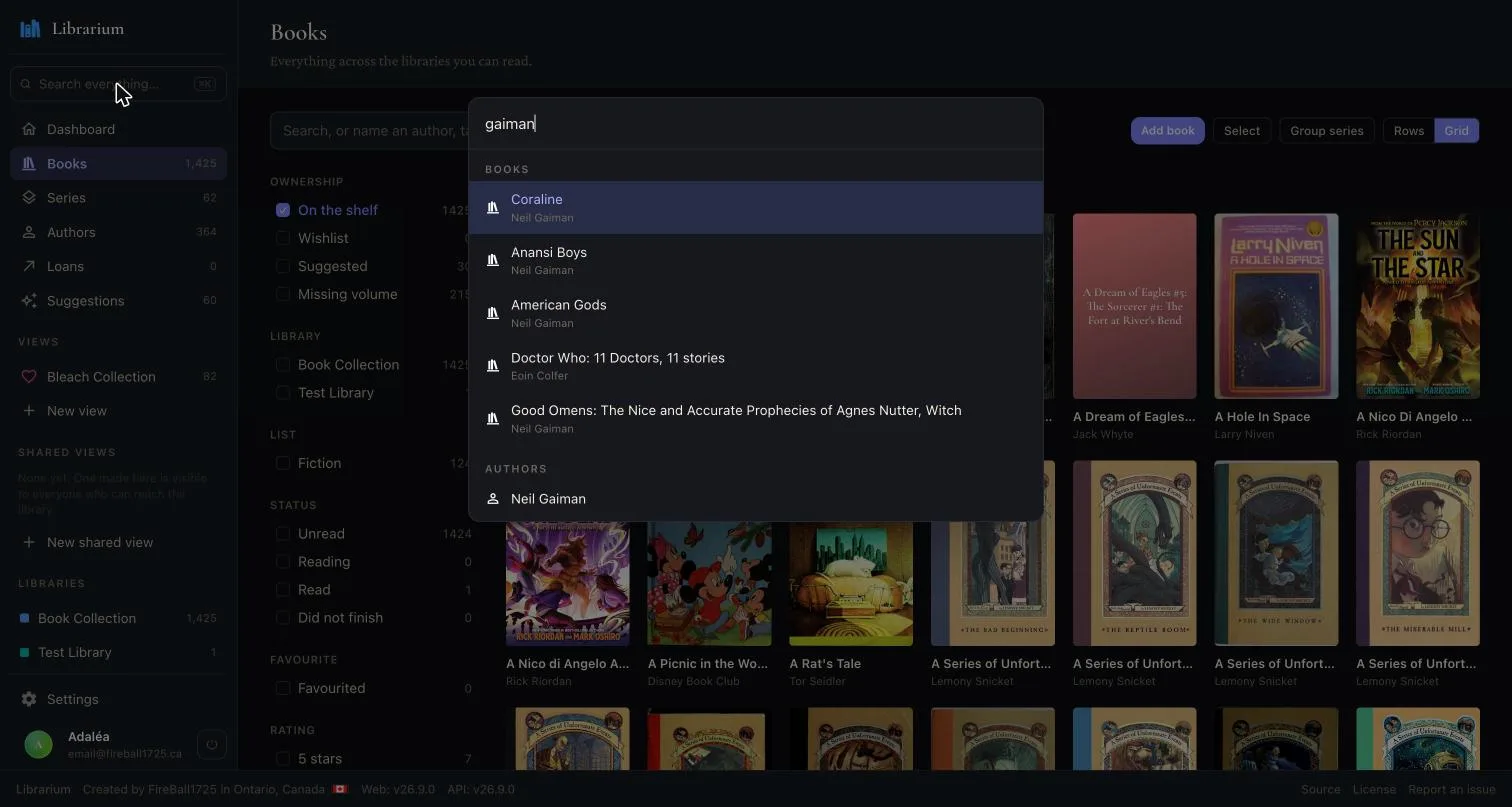
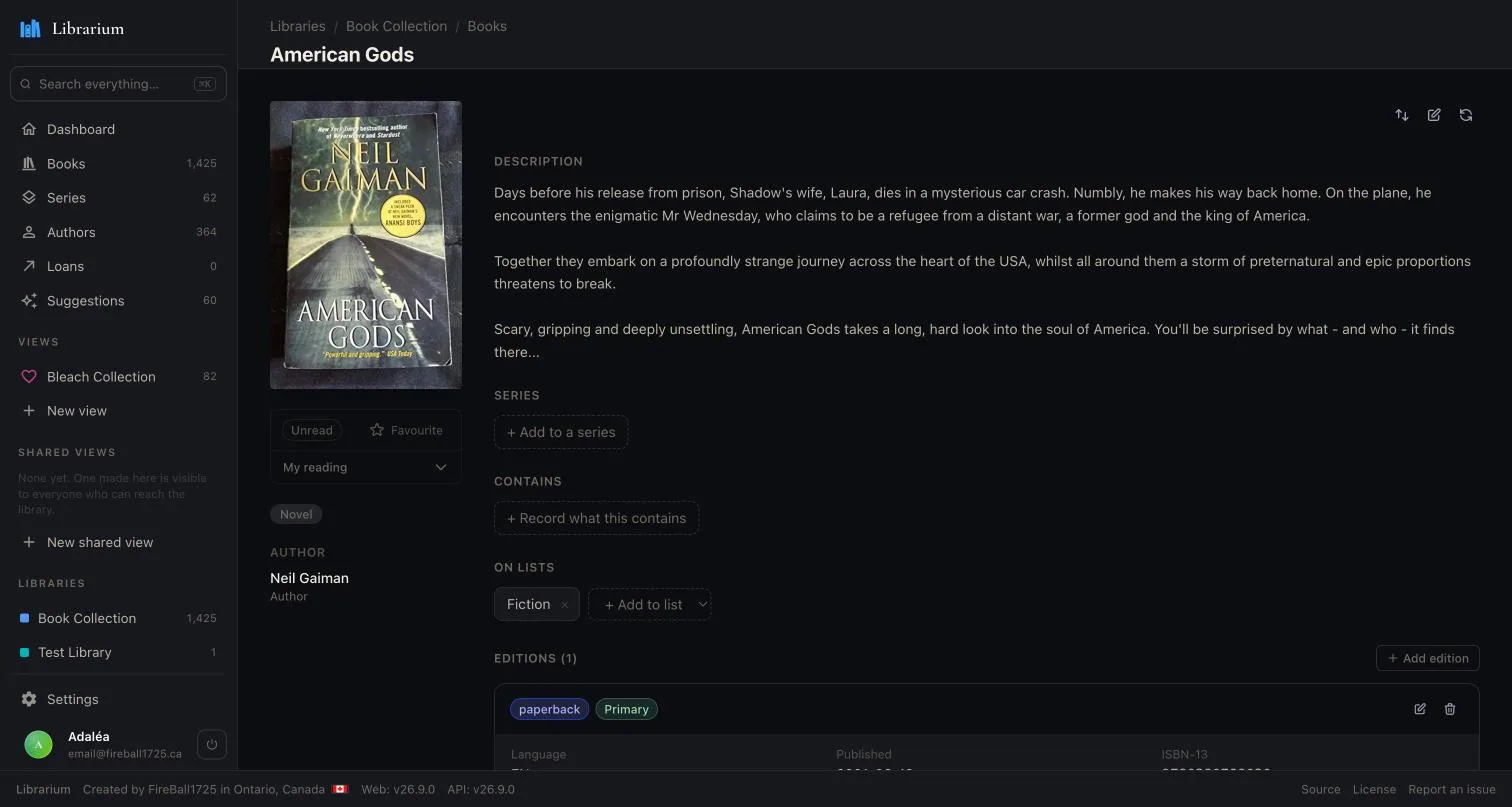
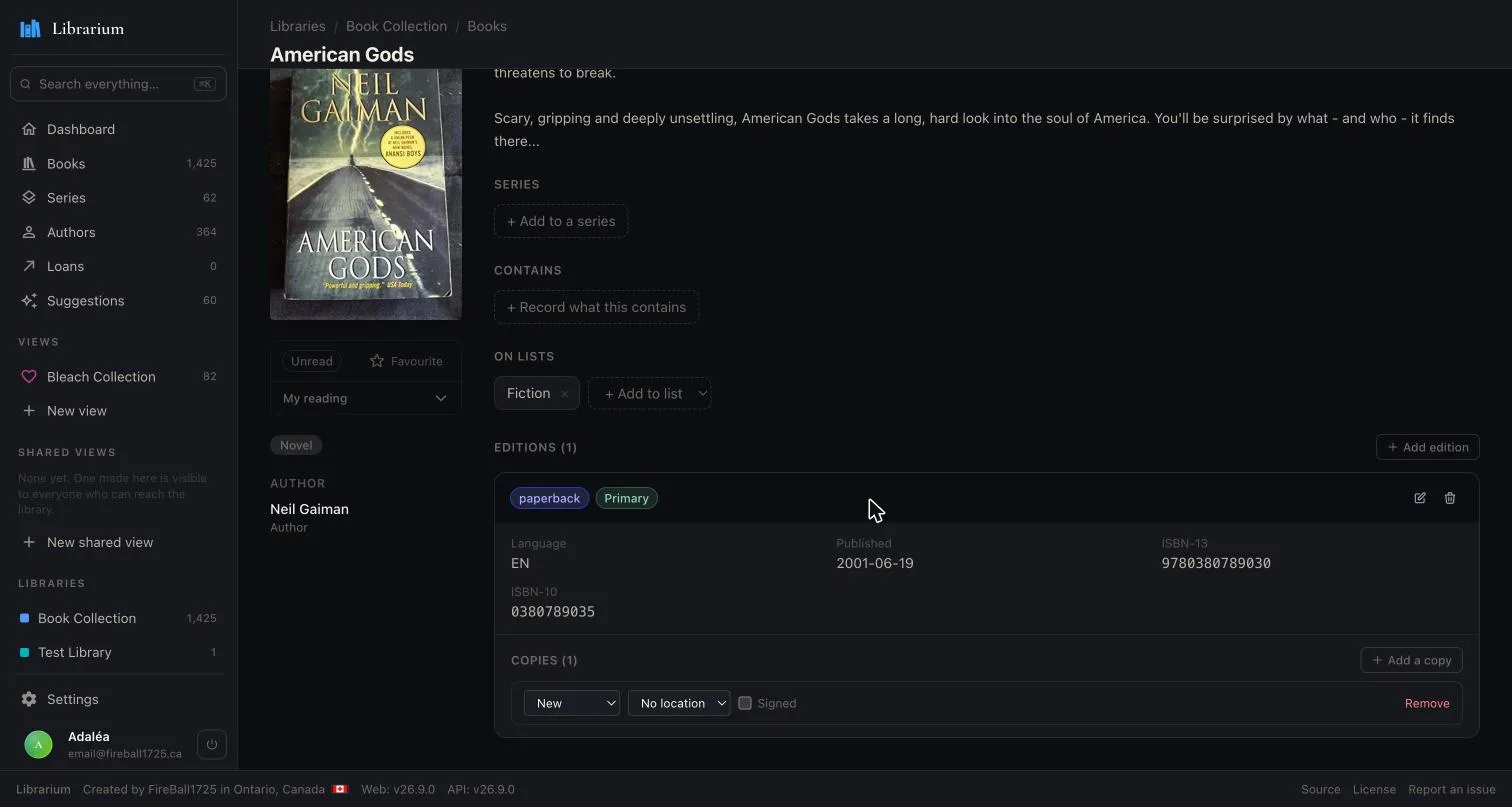
Web

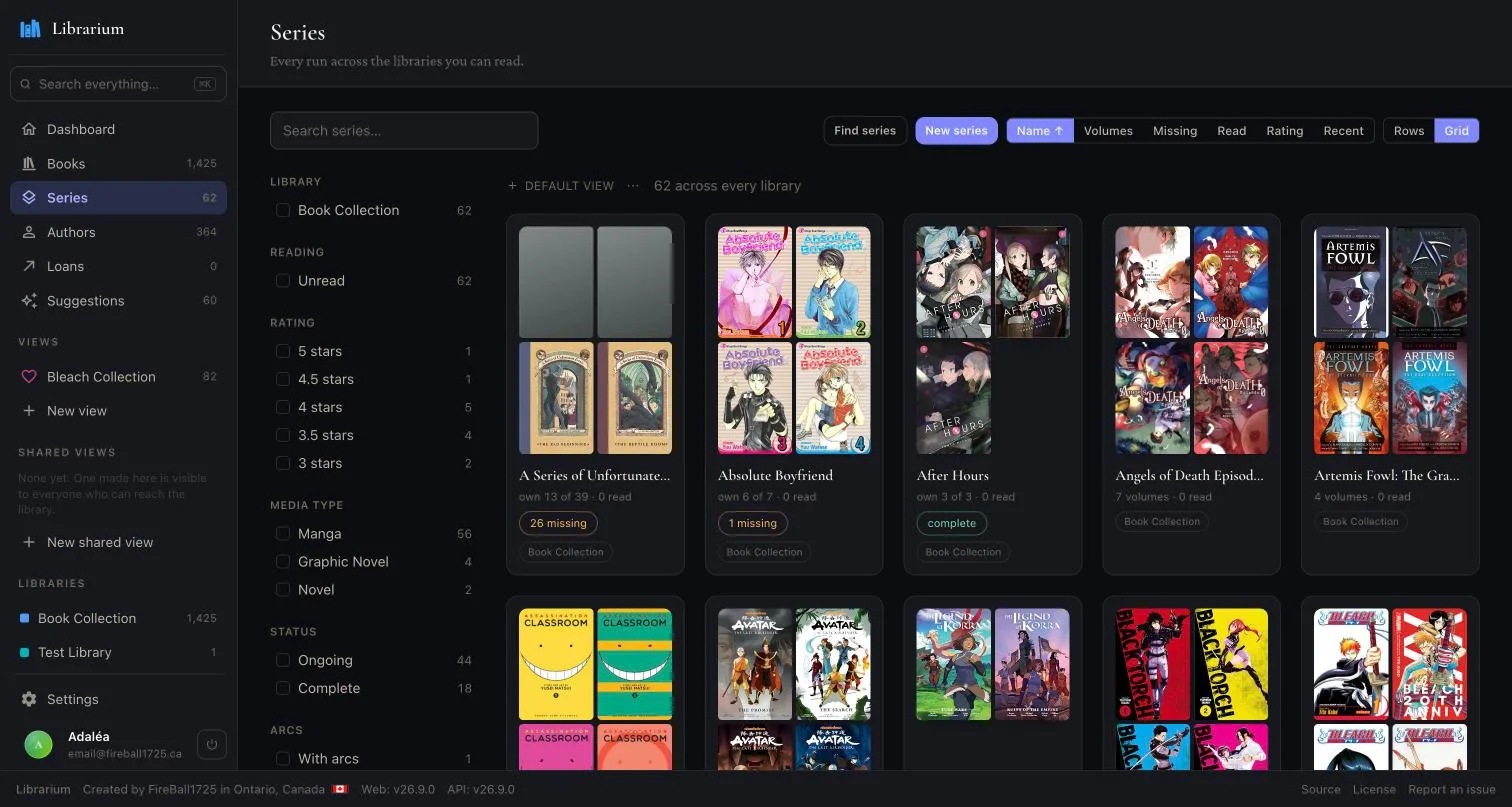
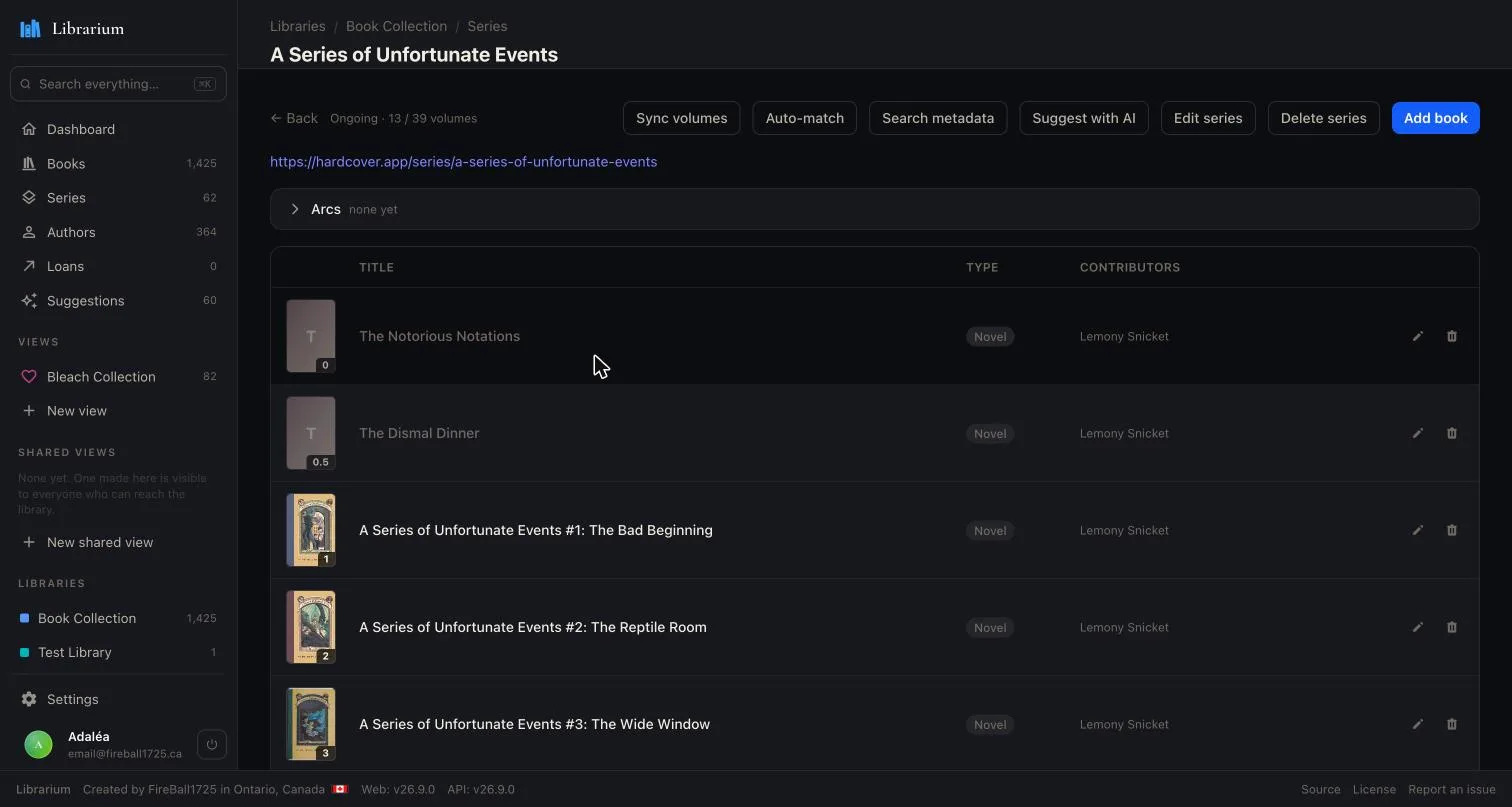
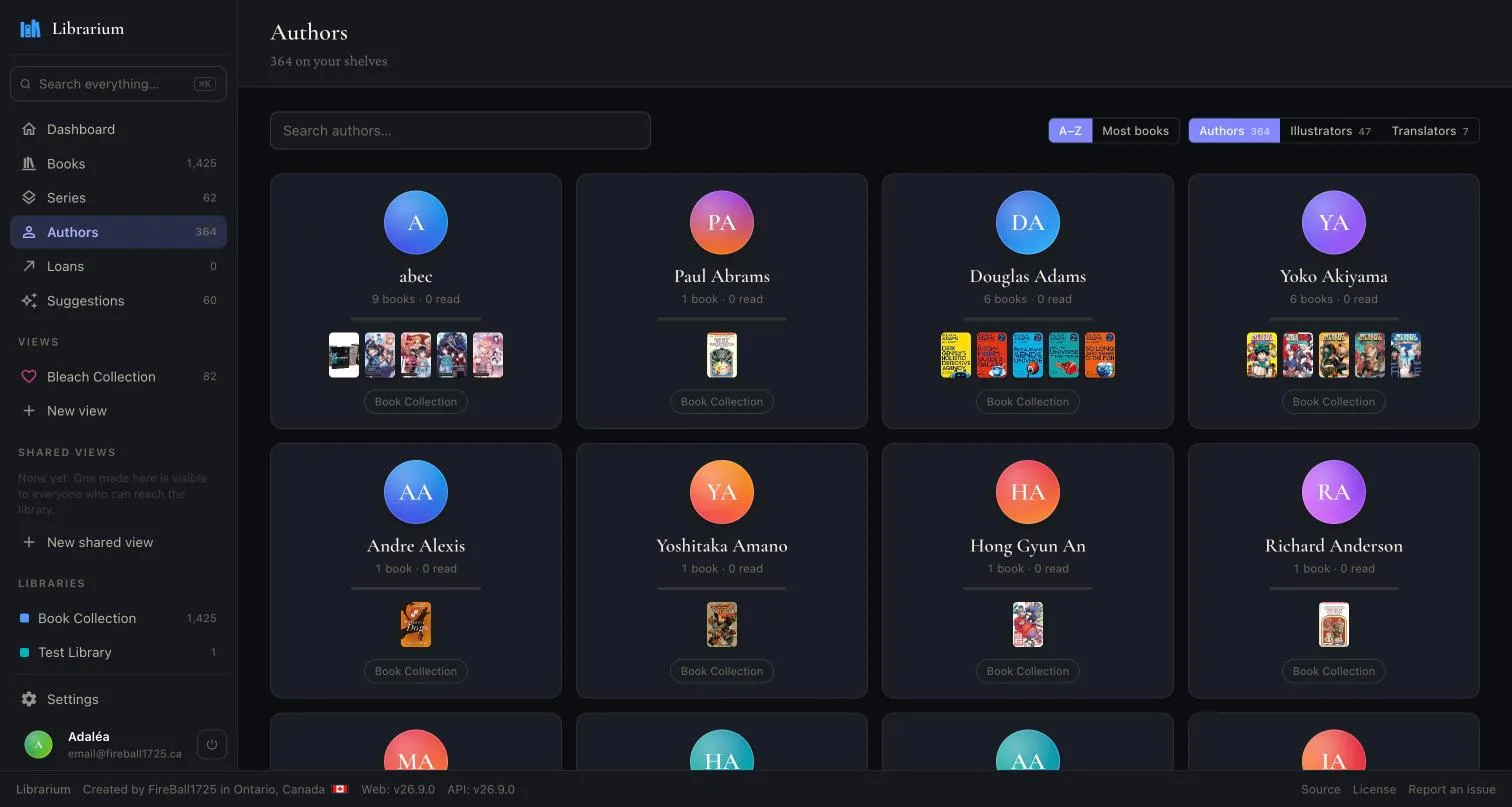
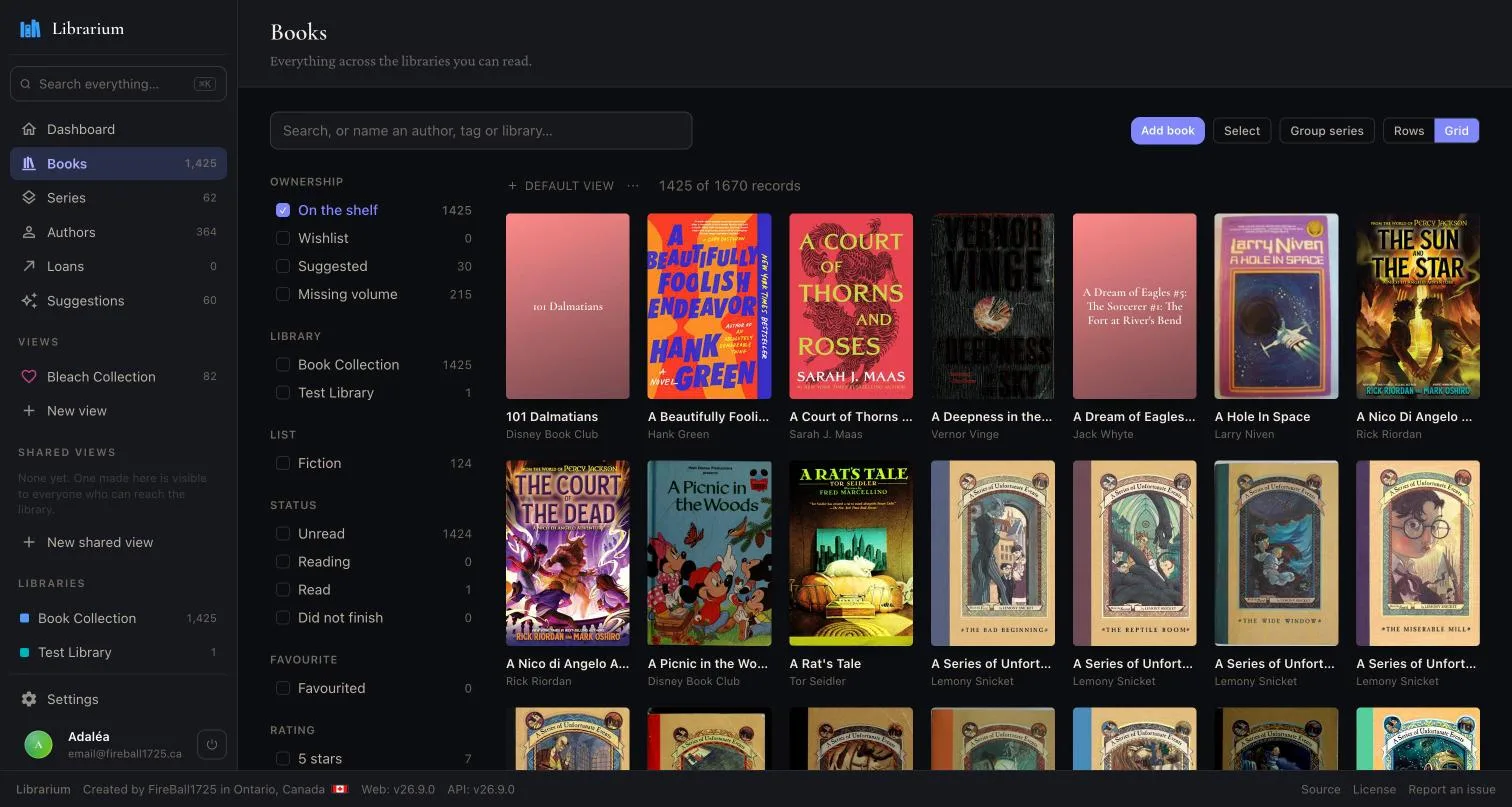
Browse, search, and curate from any browser.

Librarium web dashboard
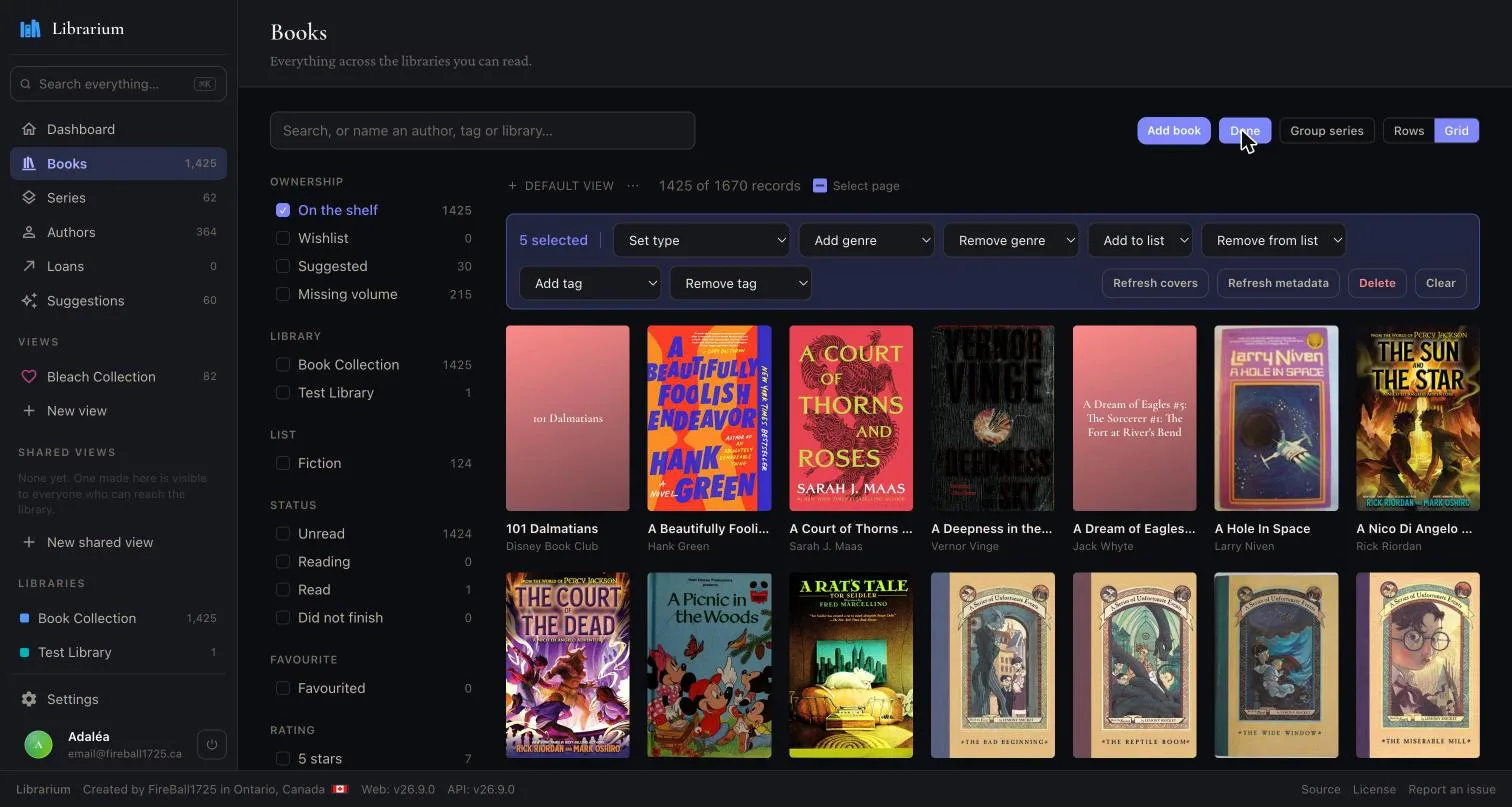
Books grid view
Books list view
Contributors page

iOS

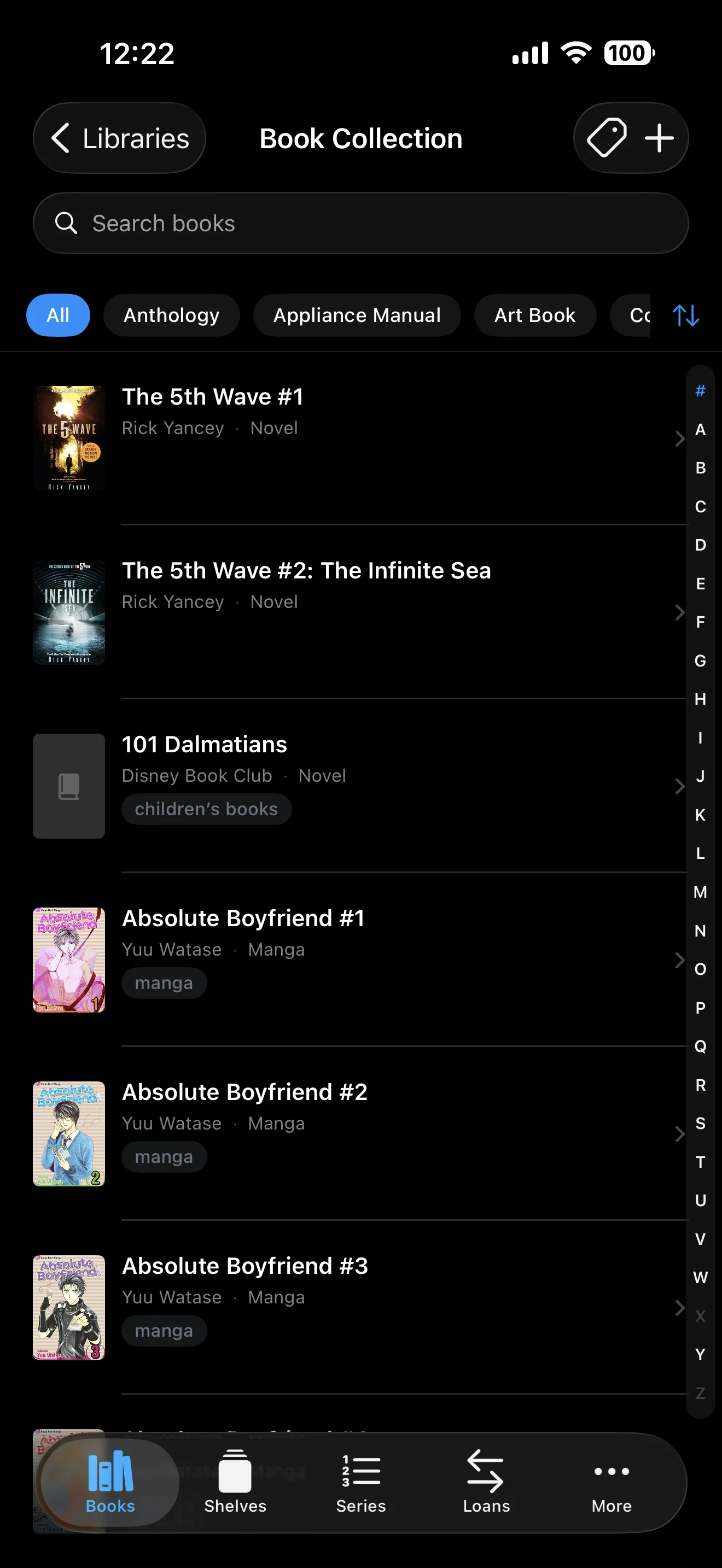
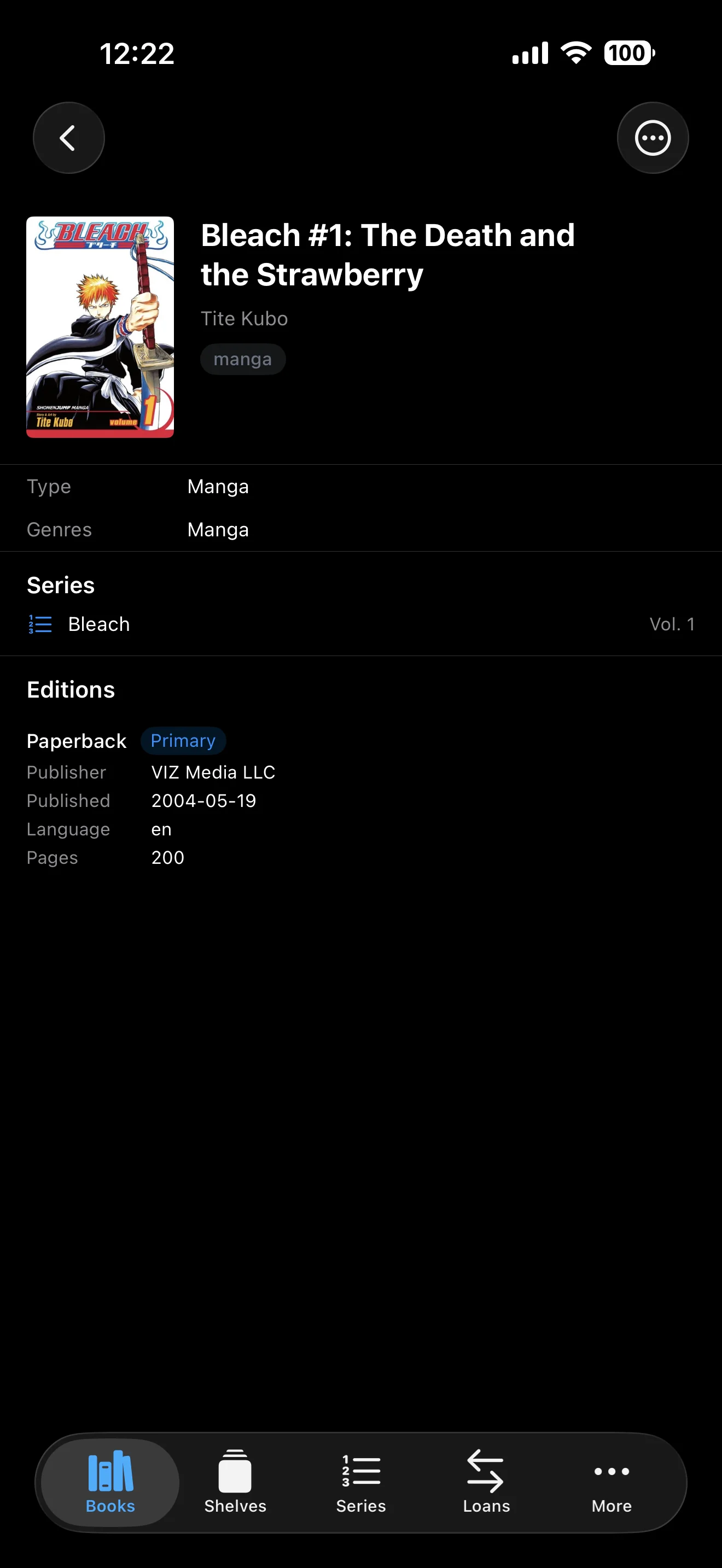
Scan at the bookstore. One tap to see if you already own it, or add it to any library if you don't.

iOS library catalogue
iOS book details

Roadmap

What's next.

Where each initiative sits in the pipeline. Solo project, so these are intentions not promises. Items move between columns as priorities shift.

Shipping next

  • iOS app redesign
  • Lite mode for iOS
  • Sync protocol (per-field timestamps, delta API)
  • App Store launch

On deck

  • CSV import (Goodreads, StoryGraph, Libib)
  • Bookstore links
  • Opt-in telemetry SDK
  • Plus hosted edition
  • Series rework

Exploring

  • iPad and Mac apps
  • Shared reading feed (household scope)
  • AI metadata enrichment
  • Library invite links
  • Bulk select on books grid

Three repos, one product.

API-first: every client consumes the same OpenAPI contract. Each piece ships independently on a YY.M.R cadence.

Plus: chat with your library.

Optional companion service. Speak MCP to Claude Desktop, Cursor, Claude Code, or any MCP-aware client and let it search, read, add, and rate books on your behalf. Runs alongside your existing stack, authenticates with a regular API token, writes are gated by per-call approval in the client.